19 Sep 2026
Labels now on Holy Honey!!
Thank you Trinity for helping me put the labels on the jars!!

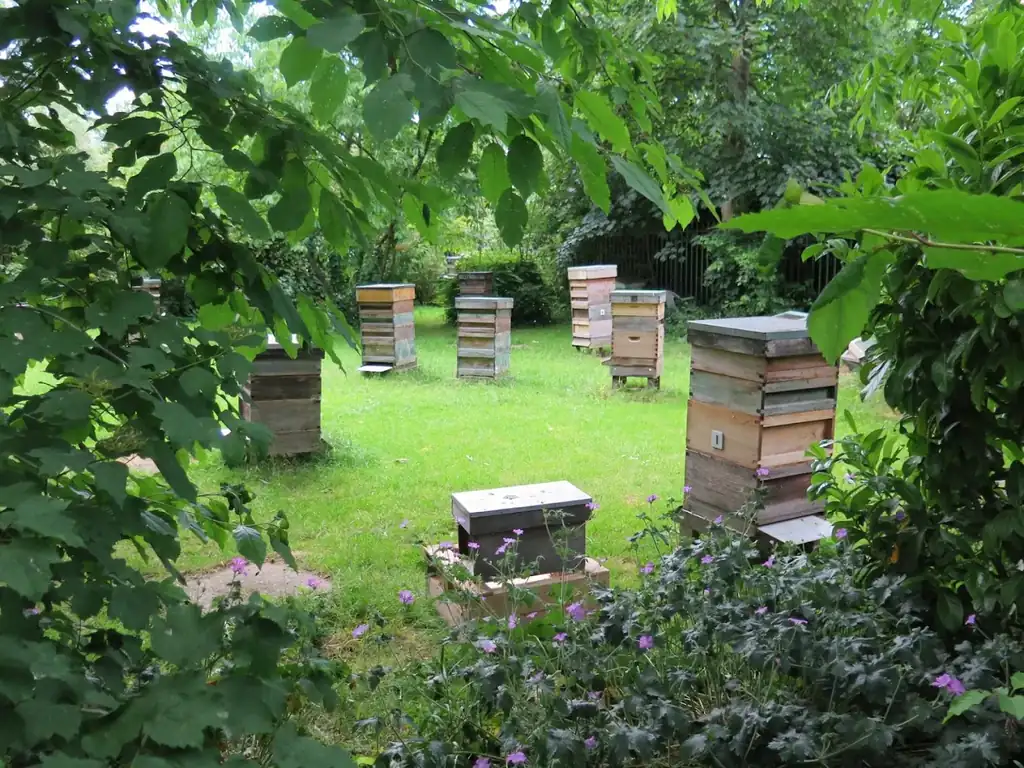
Honey Bees in South West London
That is what a worker makes in her whole life. Sponsor one, and you pay for the frames, the feed and the winter she has to survive first.
2026 season
1,337
of 15,000 sponsorships claimed
13,663 left. A hive runs to somewhere between 30,000 and 50,000 bees at the height of summer, so this is a limit I set, not a headcount.
Bee Club
Notes from the apiary, posted from my phone with cold hands. Inspections, weather, what went right and what stung.
19 Sep 2026
Thank you Trinity for helping me put the labels on the jars!!
12 Sep 2026
Well thank you to James and our two helpers! The Holy Honey has been bottled in jars, labels needed to be added and it…
Sponsor a Bee
Every week features one bee. Sponsor her for a day, a week, a month or a year. Every sponsorship gets a numbered card, made out to you or to whoever you are giving it to.
Class 1
£5
Twenty-four hours of one bee. She will not notice, but you will both know. The easiest present you will buy this year.
Choose Class 1Class 2
£12
Seven days of this week's bee. Buy it for yourself or send it to somebody as a gift.
Choose Class 2Class 3
£30
A whole month in your bee's company. Certificate included, loyalty not guaranteed.
Choose Class 3Class 4
£250 a year
A full year of one bee. Statistically several bees, but we do not tell them that. Built for businesses and memorials too.
Choose Class 4Straight answer, because it matters: nobody can track one individual insect. A worker lives about six weeks in summer. Your bee is a named companion in a real, named, photographed colony, and your card records the hive she belongs to. What your money buys is real: frames, foundation, feed, treatment and the hours.
The beekeeper
My name is Jonathan Palmer (JP) I keep Honey Bees behind a church in SouthWest London. All Honey Harvested is sold and all proceeds given back to the church.
Play with a hive instead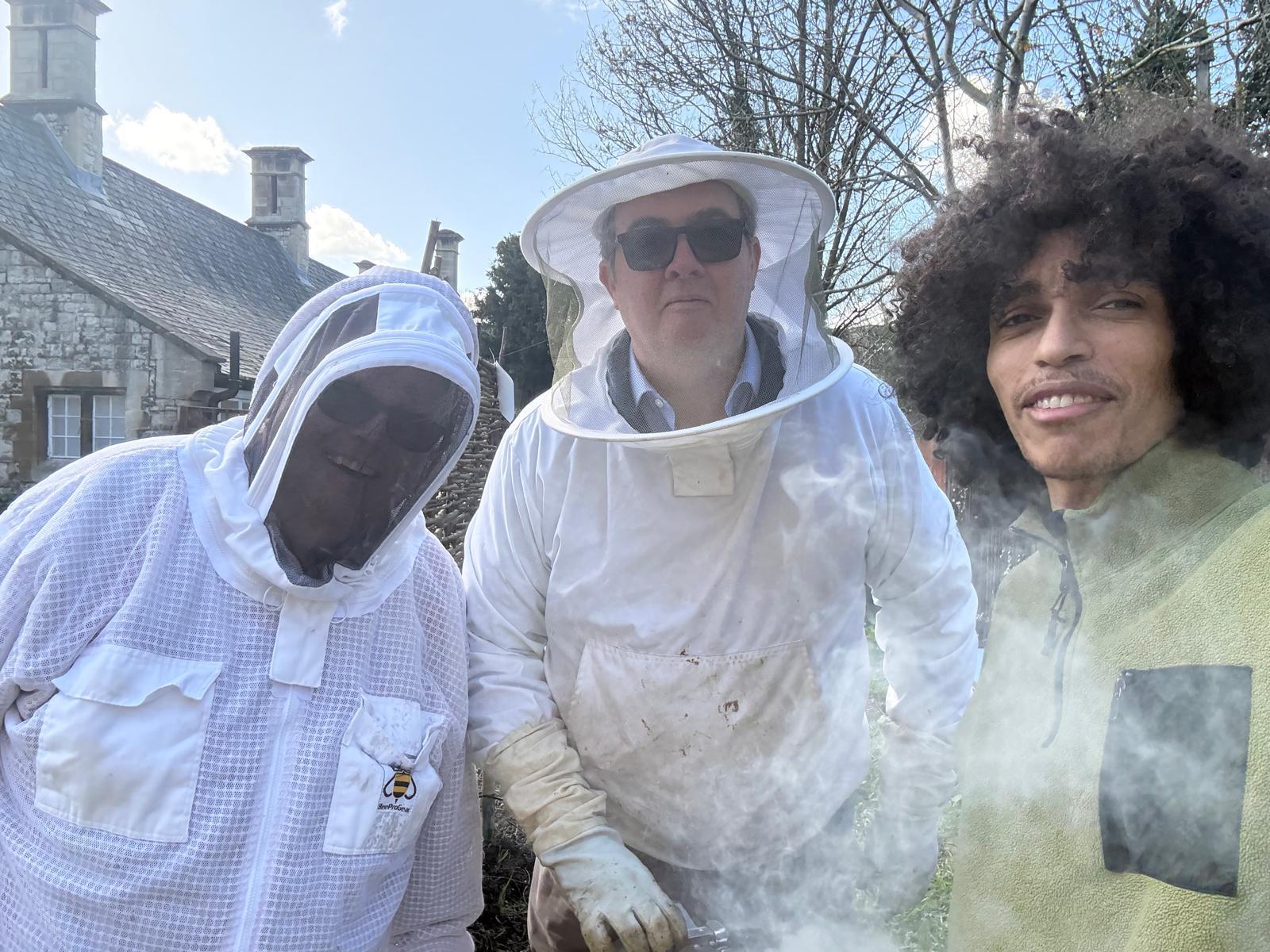
A present
Every sponsorship can be sent as a gift. You choose the date, write a message, and we hold the card sealed until the morning it is due. They get a named bee, a numbered card and the updates from the apiary.
It costs five pounds to give somebody a bee for a day, and it beats another candle.
Why Holybees
The Exsultet, the proclamation sung at the Easter Vigil and one of the oldest texts the church still uses, praises the work of bees, because their wax makes the Paschal candle that stands for the risen Christ. Their labour is written into the liturgy itself.
St Ambrose had a swarm settle on his face as an infant and come to no harm, which his father read as an omen. He grew up to be the patron saint of beekeepers, and his preaching was described as honey. St Augustine compared the whole church to a hive: every member working, none of them for themselves.
So bees in a churchyard are not a coincidence of geography. It is the oldest working partnership in Christian symbolism, and these ones happen to be mine.
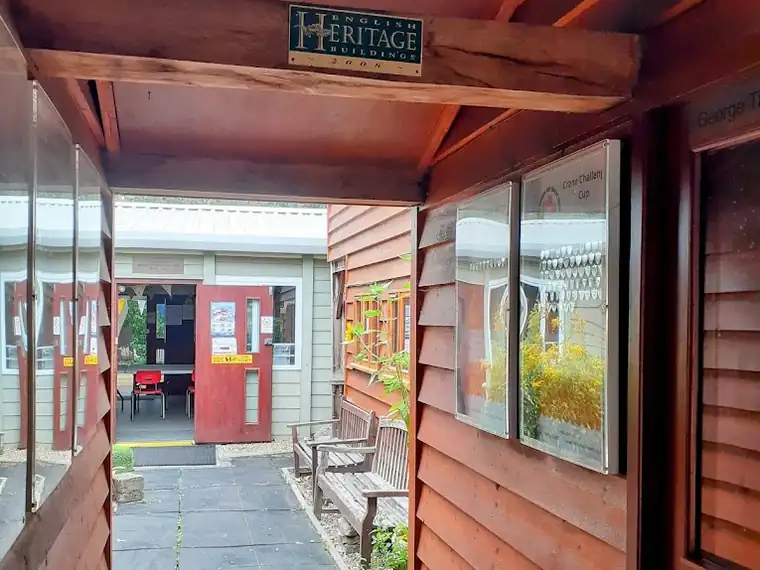
The building, from the public record
St John the Baptist was built in 1856 to the designs of James Deason, in ragstone and in the manner of the fifteenth century, with a battlemented north west tower. The land and £2,000 came from the Duke of Northumberland, and John Farnell of the Isleworth Brewery paid for the parsonage, a school and twelve almshouses on top of it. It is Grade II listed, and it keeps a complete set of stained glass attributed to William Wailes, which is a rare thing to survive intact.
It is a working parish church, not a visitor attraction, and nothing to do with me beyond the ground my hives sit on. If you want to see inside, go to a service.
There is a second reason for the name, and it is not just symbolism. The bees kept here are Buckfast bees, a strain bred inside a working Benedictine monastery. Buckfast Abbey, in the Dart Valley in Devon, is where a single monk spent seventy years perfecting them.
In 1906 a disease swept through Britain\'s honeybees and killed around ninety per cent of them. At Buckfast, a young Bavarian monk called Brother Adam, put in charge of the abbey bees at seventeen, watched most of his colonies die. The survivors were a few hives of Italian stock that resisted the disease, and from them he set out to breed a bee that combined Italian resilience with the native bee\'s hardiness. He travelled Europe, the Middle East and Africa gathering the best genetics he could find, and selected only for gentleness, health and honey. He worked at it until the 1990s and died in 1996, aged 98.
So these bees were, quite literally, conceived and perfected in a monastery through a life of quiet devotion. That is why, to the people who keep them, they are the holy bees.
Holybees is not run by, affiliated with or endorsed by the parish. The history below is drawn from public records, and the hives are simply on the ground behind the building.
Holybees is run by JP as an individual, not as a charity. Sponsorship is a purchase with benefits, not a donation, so there is no Gift Aid and no charity registration. The hives happen to stand on church ground, but the parish has nothing to do with this site and is not selling you anything: you are buying from JP.